Why Tongue Cleaning Is Essential for Fresh Breath
Fresher Breath and Other Surprising Tongue Cleaning Benefits
Persistent bad breath often comes down to more than just what you ate for lunch. Chronic dry mouth, inadequate hydration, and the habit of breathing through your mouth rather than your nose all contribute to a stale, unpleasant taste. These factors allow bacteria to thrive and linger, creating a cycle that can be difficult to break with brushing alone. Most people reach for mouthwash or an extra stick of gum. The real fix, though, starts on your tongue. Family Dental Care in the St. Charles and Glen Ellyn, IL area is explaining how you can get fresher breath and other surprising tongue cleaning benefits.
What Happens on the Tongue Surface
Your tongue is covered in tiny projections called papillae, and between them, bacteria, dead cells, and food debris accumulate into a thin film called biofilm. That coating is one of the primary sources of bad breath, and it gets worse in winter when your mouth tends to be drier. Saliva normally flushes away a lot of this buildup, but cold weather dental problems like dehydration and mouth breathing reduce saliva flow, leaving the tongue coated longer.
How Tongue Cleaning Improves Your Breath
Brushing your teeth removes plaque from enamel surfaces, but it barely touches the back third of the tongue, where most odor-causing bacteria live. Scraping or brushing the tongue directly removes that bacterial film at the source. According to an article from the Journal of Periodontology, tongue cleaning can reduce volatile sulfur compounds (the chemical culprits behind bad breath) by up to 75%, making it one of the most effective steps you can take for winter oral hygiene.
Best Ways to Clean Your Tongue
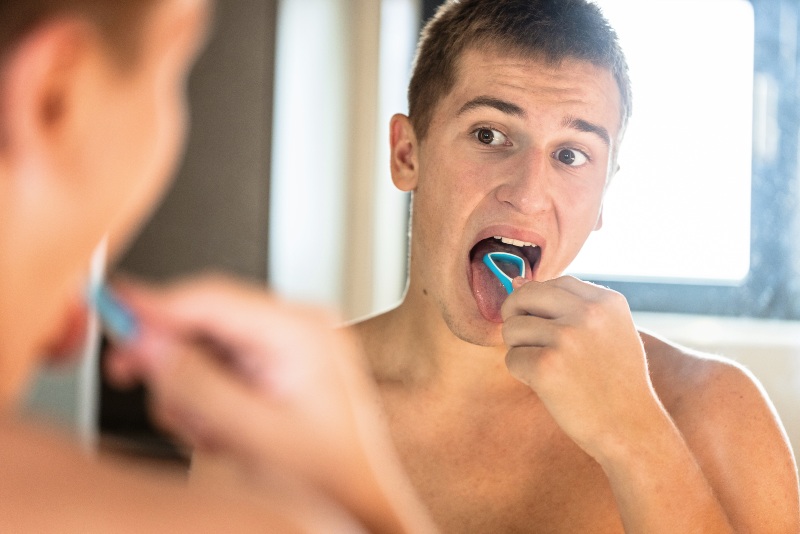
A toothbrush works in a pinch, but a dedicated tongue scraper clears more surface area in fewer strokes and removes the biofilm rather than just redistributing it. To get the most out of your routine, follow this step-by-step guide:
- Start After Brushing and Flossing – Clean the rest of your mouth first, so you’re not reintroducing bacteria to a freshly scraped tongue.
- Stick out Your Tongue Fully – Maximum extension gives you better reach toward the back, where buildup is heaviest.
- Place the Scraper at the Base of Your Tongue – Position it as far back as is comfortable without triggering your gag reflex.
- Apply Light, Even Pressure and Pull Forward – One smooth stroke from back to front. Avoid pressing hard enough to cause irritation.
- Rinse the Scraper Between Strokes – Run it under warm water to clear the debris before the next pass.
- Repeat Two to Three Times – Cover the full width of the tongue, overlapping each pass slightly.
- Rinse Your Mouth With Water – A final rinse washes away any remaining residue.
Common Mistakes to Avoid
Even people who clean their tongues regularly pick up habits that reduce the effectiveness of the practice. A few adjustments can make a meaningful difference in your seasonal oral health tips routine. Some mistakes to avoid include:
- Scraping Too Aggressively – Excessive pressure irritates the papillae and can cause minor bleeding or soreness that makes you skip the step altogether.
- Starting at the Tip Instead of the Base – Working front-to-back pushes bacteria further toward the throat rather than out of the mouth.
- Skipping the Back Third – That’s where the highest concentration of odor-causing bacteria live; stopping mid-tongue defeats much of the purpose.
- Reusing a Scraper Without Rinsing – Each pass needs a clean surface, or you’re spreading the same film around.
- Cleaning Your Tongue but Skipping Hydration – Oral health in cold weather depends heavily on staying hydrated, since a dry mouth repopulates with bacteria fast.
Other Important Bad Breath Prevention Tips
While tongue scarping can make a noticeable impact on halitosis, it’s not everything. There are many other habits, like routine oral care visit, that can help you keep your breath fresh and your smile confident. Below are some common tips that can help prevent or manage bad breath.
Drink More Water Than You Think You Need
Dehydration is a quiet contributor to cold-weather dental problems. Indoor heating pulls moisture from the air, and people tend to drink less water when they’re not sweating. Aim for at least eight glasses daily and keep a bottle nearby during work hours to support winter mouth care.
Breathe Through Your Nose When Possible
Mouth breathing bypasses the nose’s natural humidification system and dries out the oral mucosa quickly. If congestion is forcing you to breathe through your mouth at night, a saline rinse before bed can help clear the nasal passages enough to make nose breathing manageable.
Adjust Your Diet During Cold Months
Certain foods accelerate bacterial growth on the tongue. Dairy, sugar, and alcohol are the main offenders, and comfort food season tends to feature all three. Swapping in crunchy vegetables like celery and carrots naturally scrubs the tongue surface and stimulates saliva, which is a simple way to protect teeth in winter without adding steps to your routine.
Use a Humidifier at Night
Running a humidifier in your bedroom keeps ambient moisture levels high enough to prevent your mouth from drying out during sleep. This single change can noticeably reduce morning breath and support dental care during winter when indoor air is at its driest.
Schedule an Appointment at Family Dental Care Now!
Winter oral hygiene is one piece of a larger picture. Consistent tongue cleaning, proper hydration, and smart seasonal habits all help, but nothing replaces a professional cleaning and exam for catching problems before they become painful. The Family Dental Care team serves patients across the St. Charles and Glen Ellyn area and is ready to help you head into the new year with a healthy mouth. Call our office or request an appointment online today.
FAQs About Tongue Cleaning
How Often Should I Clean My Tongue?
Once daily is sufficient for most people, ideally as part of your morning routine since bacterial buildup tends to peak overnight. If you’re dealing with persistent bad breath or a heavy white coating, twice-daily cleaning is reasonable, but always use light pressure to avoid irritating the tissue.
Should I Clean My Tongue With a Toothbrush or a Scraper?
A tongue scraper is generally more effective because it collects and removes the biofilm rather than just moving it around. Toothbrush bristles can reach the papillae more thoroughly, so some dentists recommend using both.
Can Tongue Cleaning Help With Tooth Sensitivity?
Tongue cleaning addresses bacteria, not enamel, so it won’t directly resolve sensitivity. For direct sensitivity concerns, a fluoride toothpaste formulated for sensitive teeth is the more targeted approach, and your dentist can recommend specific products.